 Inqodo
On this page
Most founders think getting their first 100 SaaS customers is about having the right marketing strategy. It’s not. It’s about having a real conversation with 100 people who have the problem you solve, and convincing them you’ve solved it well enough to pay. The marketing comes later. Right now, you need to talk to people.
The difference between founders who get to 100 customers in three months and those still stuck at 12 after a year is not budget or connections. It’s whether they’re willing to do things that don’t scale. The playbook is unglamorous: find people with the problem, message them directly, get on a call, show them the product, ask for money. Repeat 100 times.
This guide walks through exactly how to do that in 2026. No growth hacks. No viral loops. Just the direct path from zero to your first 100 paying customers.

Define Your Ideal Customer Profile Before You Do Anything Else
You cannot get 100 customers if you don’t know who they are. Not “small businesses” or “SaaS founders.” Specific. What industry, what size, what role, what specific problem keeps them awake at 2am.
Write down three things about your ideal first customer:
- What they do for work (not just job title, the actual day-to-day)
- What problem they have that your product solves (one sentence, no jargon)
- Where they already spend time online (specific communities, not “social media”)
Your first 100 customers should be nearly identical. Not because you’ll only serve this group forever, but because talking to 100 people with the same problem teaches you more than talking to 100 people with 100 different problems. You’re looking for pattern recognition, not diversity.
If you’re building a SaaS product for restaurant managers who need better staff scheduling, your ICP is not “hospitality professionals.” It’s restaurant managers at independent restaurants with 15 to 40 staff, who currently use a spreadsheet or pen and paper, and who have complained about scheduling in the last six months. That level of specific.
Most founders skip this step because it feels limiting. The real limit is trying to sell to everyone and converting no one. We’ve seen this firsthand with clients who come to us six months in, frustrated that nothing is working. The product is fine. The audience is too broad.

Validate the Problem With Real Conversations Before You Scale Anything
Before you spend money on ads or hire a growth person, talk to 20 people who match your ICP. Not a survey. Not a landing page. A conversation. Video call, phone call, or in person.
Ask them three questions:
- How do you currently solve this problem? (Listen for workarounds, manual processes, or competitors they’re unhappy with)
- What would make you switch to something new? (This tells you what your product needs to do better, not just differently)
- If I built this, would you pay for it? (Ask for a number. If they hesitate or say “it depends,” the problem isn’t painful enough yet)
These conversations do two things. First, they confirm you’re solving a problem people will pay to fix. Second, they give you the exact language your customers use to describe the problem. Use that language everywhere, in your landing page, your emails, your demo. When a prospect reads your copy and thinks “how did they know exactly what I was thinking,” you’ve done this right.
According to a 2025 First Round Capital study, startups that conducted at least 15 customer discovery interviews before launch were 2.5x more likely to reach product-market fit within 12 months than those who didn’t.
If 15 out of 20 people say yes, they’d pay, and they can tell you a specific number, you’re ready to build and sell. If fewer than half are interested, the problem isn’t painful enough or your solution isn’t compelling. Rethink before you build more. This is the conversation that saves you six months and £30,000.

Use Direct Outreach to Get Your First 30 Customers
Your first 30 customers will not find you. You need to find them. That means outbound, one person at a time. Email, LinkedIn, Twitter DMs, cold calls if your audience expects them. Personalized, specific, and honest about what you’re offering.
Here’s the structure that works:
- Line one: Reference something specific about them (a post they wrote, a problem they mentioned, a tool they said they use)
- Line two: State the problem you solve in their words, not yours
- Line three: One sentence about what your product does
- Line four: Ask for 15 minutes to show them, with a specific benefit for their time
Example: “Saw your post about scheduling chaos during peak season. We built a tool that auto-generates staff schedules based on your sales forecast and availability. Takes about four minutes to set up. Worth 15 minutes next week to see if it works for your restaurant?”
Send 10 of these per day. Personalized, not templated. If you’re getting fewer than 2 responses out of 10, your targeting is wrong or your message isn’t specific enough. Adjust and send another 10.
This does not scale. That’s the point. You’re not trying to reach 10,000 people. You’re trying to reach 100 people who will pay you. The ones who respond to a direct, honest message are the ones who become your best early customers. They’re also the ones who will tell you what’s broken and what to build next.
Founders who are willing to send 300 personalized messages get to 30 customers faster than founders who spend three months building a content strategy. Both matter eventually. Right now, outbound matters more. If you’re not sure whether your product is ready for this, read this guide on what to build first.
Build Trust With Personalization and Proof
Nobody trusts a new SaaS product. Especially not one with zero customers, no reviews, and a founder they’ve never heard of. You need to give them a reason to take the risk. That reason is not your feature list.
The three things that build trust fastest with early customers:
- Specificity: Show them you understand their exact problem, not a general version of it
- Speed: Offer to get them set up in one call, today if possible
- A guarantee: Money back if it doesn’t work, cancel anytime, or free until they see value
Early adopters are not buying your product. They’re buying your commitment to making it work for them. That means being available, responsive, and willing to build the one feature they need to say yes. Within reason. If they’re asking for a feature that benefits one person, probably not. If they’re asking for a feature that ten other prospects also mentioned, build it.
One tactic that works surprisingly well: offer to set up their account for them. Onboarding is where most SaaS trials die. If you remove that friction entirely by doing it yourself, on a call, walking them through it, they’re far more likely to convert. This doesn’t scale to 10,000 customers. It absolutely works for your first 30.
Proof matters too, but at this stage you don’t have much. Use what you have. One testimonial from a beta user is worth more than a feature comparison chart. A 30-second screen recording of the product working is worth more than a landing page with stock photos. Show the thing working. That’s the proof.
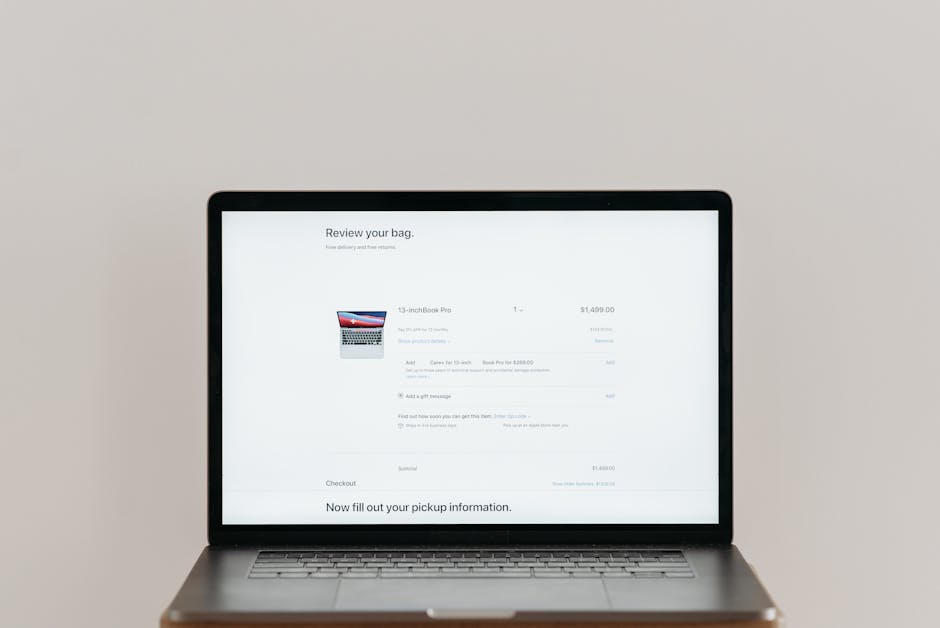
Proof doesn’t have to be a case study on day one. A short launch video that shows the product working does the same job, and studios like Flowjam make these for AI and SaaS startups
Design Your Pricing and Offer for Early Adopters
Your pricing for your first 100 customers does not need to be your forever pricing. It needs to be low enough that the risk feels acceptable, and high enough that they take it seriously. Free trials are fine. Free forever is a mistake.
Here’s what works for most early-stage B2B SaaS products:
- Charge something. Even if it’s $29/month. Paying customers behave differently than free users. They give feedback. They stick around. They tell you when something is broken.
- Offer a founder’s discount. “First 100 customers get 50% off for life” or “locked in at this price forever.” This creates urgency and rewards the people taking a risk on you.
- Make cancellation trivial. No hoops, no calls, no guilt trips. Let them cancel in two clicks. The ones who stay are the ones who see value.
Avoid long free trials for your first 100. A 14-day trial forces them to evaluate quickly. A 30-day trial gets forgotten. If they’re not sure after two weeks, they’re not your customer yet. Follow up in three months when their current solution breaks again.
Pricing is also a filter. If someone says your product is too expensive at $49/month, they’re either not feeling the pain acutely enough, or they’re not your ICP. Both are useful signals. Don’t drop your price to win them. Find the people who see $49/month as cheap compared to the problem you’re solving.
We’ve worked with founders who underpriced their MVP at $9/month and attracted customers who churned at 60% within three months. We’ve also worked with founders who charged $199/month from day one and kept 90% of their first 50 customers past six months. The second group built a business. The first group built a leaky bucket. If you’re still figuring out what to charge, use this calculator to understand what your product actually costs to run.

Use a Channel-by-Channel Execution Plan With Real Timelines
Most guides tell you to “try multiple channels.” That’s not helpful. Here’s what actually works for getting your first 100 SaaS customers in 2026, with realistic timelines for each channel.
Weeks 1 to 4: Direct outreach (target: 20 to 30 customers)
- Send 10 personalized emails or LinkedIn messages per day
- Goal: 3 to 5 demos per week, 30% close rate
- This gets you your first 15 to 25 paying customers if your ICP is right
Weeks 5 to 8: Community engagement (target: 15 to 25 customers)
- Join 3 to 5 online communities where your ICP already hangs out (Slack groups, Discord servers, niche subreddits, industry forums)
- Answer questions, share what you’re learning, mention your product only when directly relevant
- Goal: 2 to 3 signups per week from people who saw you helping others
Weeks 9 to 12: Referrals and word of mouth (target: 20 to 30 customers)
- Ask your first 30 customers for intros to one other person with the same problem
- Offer an incentive: one month free for every referral that converts, or a flat £50 credit
- Goal: 30% of your early customers refer at least one other customer
Weeks 13 to 16: Content and inbound (target: 10 to 20 customers)
- Write one blog post per week answering the exact questions your first 50 customers asked you
- Share those posts in the communities you’ve been active in
- Goal: start generating 3 to 5 inbound leads per week by week 16
Notice what’s missing: paid ads, SEO, influencer partnerships, PR. Those all work later. For your first 100 customers, the highest-leverage channels are the ones where you talk to people directly. Outreach, communities, and referrals will get you to 100 faster than any ad campaign with a £5,000 budget.
If you’re a technical founder without a cofounder to handle this, you need to do it anyway. The product does not sell itself at this stage. If the idea of sending 300 cold emails makes you want to hire an agency, don’t. Do the first 50 yourself. Learn what works. Then decide if you need help. Most founders who outsource this too early waste money on messages that don’t convert because the agency doesn’t understand the customer as well as the founder does.
For context on whether you even need a cofounder for this stage, this post covers the trade-offs.
Collect Feedback and Iterate Based on What Customers Actually Do
Your first 100 customers will tell you what to build next. Not with feature requests, though those matter. With behaviour. What they use, what they ignore, where they get stuck, and when they churn.
Instrument your product to track this from day one:
- Activation: What percentage of signups complete the core workflow within 7 days?
- Engagement: How often do paying customers log in per week?
- Churn: Which customers cancel in the first 30 days, and what did they have in common?
If fewer than 40% of signups are completing your core workflow, your onboarding is broken. If paying customers log in fewer than twice per week, your product isn’t sticky enough yet. If 30% of customers churn in the first month, you’re either attracting the wrong people or the product isn’t delivering on the promise.
The fix is not more features. The fix is talking to the people who churned and asking them one question: what were you hoping this would do that it didn’t? Their answer tells you whether you have a positioning problem, a product problem, or an ICP problem.
We worked with a founder who had 60 customers in month three and a 50% churn rate. The product worked. The problem was that half the people signing up thought it did something it didn’t, because the landing page was vague. We rewrote the landing page to be brutally specific about what the product did and didn’t do. Signups dropped by 30%. Churn dropped to 12%. Revenue went up. Specificity filters out the wrong people before they waste your time and theirs.
Run a feedback call with every customer who’s been using your product for 30 days. Ask them what’s working, what’s frustrating, and what would make them recommend it to a colleague. The last question is the most important. If they can’t answer it clearly, you haven’t delivered enough value yet.
If you’re planning to scale this product past 100 customers and you’re not sure your architecture can handle it, read this guide on scaling an MVP.
What This Actually Costs and How Long It Takes
Most founders get to 100 customers in 3 to 6 months if they follow this plan. The ones who do it in 3 months are sending 15 outreach messages per day and running 5 demos per week from week one. The ones who take 6 months are doing this part-time or spending too much time on things that don’t directly lead to customer conversations.
Here’s the cost breakdown if you’re doing this yourself:
- Product development: £8,000 to £15,000 for a working MVP with auth, billing, and core features (if you’re outsourcing to a team like Inqodo, who build production-ready SaaS products without low-code shortcuts)
- Tools: £100 to £200/month (email tool, CRM, analytics, hosting)
- Your time: 20 to 30 hours per week on outreach, demos, and customer calls
If you’re pre-revenue and trying to keep costs low, you can get your first 30 customers with a simpler version of the product and scale up as you prove demand. We’ve seen founders validate their idea with a £2,000 MVP, get 20 paying customers, and then invest in the full build once they knew it worked. That’s the smart way to do it if you’re bootstrapping.
The mistake is spending £30,000 on a fully-featured product before you’ve had a single customer conversation. We’ve had clients come to us after doing exactly that, asking us to fix a product nobody wants. The product is fine. The problem is they built the wrong thing. If you’re not sure what to build first, this guide walks through the full process.
Time-wise, expect to spend 60% of your time on customer acquisition and 40% on product in the first three months. That ratio flips once you hit 100 customers and start focusing on retention and scale. But right now, talking to customers is the product work.
Frequently Asked Questions
How do I get my first 100 SaaS customers?
You get your first 100 SaaS customers by defining a narrow ICP, validating the problem with 20 direct conversations, and then using outbound outreach to find and message people who match that profile. Send 10 personalized emails per day, run demos with everyone who responds, and close 30% of those demos. Repeat for 12 weeks. Most founders who do this consistently hit 100 customers in 3 to 6 months.
What is the best SaaS customer acquisition strategy for a new startup?
The best acquisition strategy for a new SaaS startup is direct outreach combined with community engagement. Outbound gets you your first 30 customers in weeks 1 to 4. Community engagement in niche Slack groups, forums, and Discord servers gets you the next 20 to 30 by week 8. Referrals from those first 50 customers get you to 100. Paid ads and content marketing work later, but they’re too slow and too expensive when you’re at zero.
How do you validate a SaaS idea before launching?
Validate a SaaS idea by talking to 20 people who match your ideal customer profile and asking them how they currently solve the problem, what would make them switch, and whether they’d pay for your solution. If 15 out of 20 say yes and can name a price, you’ve validated demand. If fewer than half are interested, rethink the problem or the solution before you build anything. This takes 2 to 3 weeks and costs nothing except your time.
How long does it take to get the first 100 SaaS customers?
It takes 3 to 6 months to get your first 100 SaaS customers if you’re doing outbound outreach, community engagement, and asking for referrals consistently. Founders who send 10 to 15 personalized messages per day and run 5 demos per week get there in 3 months. Founders who do this part-time or spend too much time on branding and content take closer to 6 months. The timeline depends entirely on how much time you spend having direct conversations with prospects.
What channels should I use to get my first customers?
Use direct outreach (email, LinkedIn, Twitter DMs) for your first 30 customers, community engagement (Slack groups, niche forums, Discord) for the next 20 to 30, and referrals from early customers for the next 20 to 30. Paid ads and SEO are too slow and too expensive at this stage. The highest-leverage channels for your first 100 customers are the ones where you talk to people directly and build trust one conversation at a time.
Should I offer a free trial to get my first 100 SaaS customers?
Offer a short free trial (7 to 14 days) but charge something after that, even if it’s only £29 per month. Paying customers give better feedback, stick around longer, and take your product seriously. Free users rarely convert and rarely tell you what’s actually broken. If you want to reduce risk for early adopters, offer a founder’s discount (50% off for the first 100 customers) or a money-back guarantee, but don’t give the product away for free.
How much does it cost to get your first 100 SaaS customers?
Getting your first 100 SaaS customers costs £8,000 to £15,000 if you’re building a production-ready MVP, plus £100 to £200 per month for tools like email, CRM, and hosting. The biggest cost is your time (20 to 30 hours per week on outreach and demos). If you’re bootstrapping, you can start with a simpler MVP for around £2,000, validate demand with your first 20 to 30 customers, and then invest in the full build once you’ve proven people will pay.
Ready to Get Started?
Getting your first 100 SaaS customers is not a marketing problem. It’s a conversation problem. The founders who get there fastest are the ones willing to send 300 personalized messages, run 100 demos, and ask for money 100 times. The product matters, but the product doesn’t sell itself at this stage.
If you’ve validated demand and you’re ready to build the MVP, we can help. Inqodo builds production-ready SaaS products for founders who need something that works, scales, and ships in 4 to 6 weeks. No low-code templates. No prototypes. A real product that real customers can pay for.
We’ve worked with founders who came to us with a validated idea and 20 customer conversations, and we built the MVP that got them to 100 customers in 10 weeks. We’ve also worked with founders who came to us with a feature list and no customers, and we told them to go have 20 conversations first. Both are the right answer depending on where you are.
If you’re ready to build, get in touch. If you’re not sure yet, go talk to 20 people first. We’ll still be here when you’re ready.
Inqodo
Inqodo Team