 Inqodo
On this page
Multi-tenant SaaS architecture explained: it’s a design pattern where a single application instance serves multiple customers (tenants) from shared infrastructure. Each tenant’s data is logically isolated. None of them know the others exist. That’s multi-tenancy, and it’s the architectural pattern that makes SaaS economics work. Without it, you’d need to deploy separate infrastructure for every customer. With it, you share the cost across everyone and scale without rebuilding the product for each new signup.
If you’re building a SaaS product in 2026, you’re almost certainly building a multi-tenant one. The question isn’t whether to use multi-tenancy. It’s how to implement it without creating security holes, performance bottlenecks, or a deployment nightmare six months in.

What Is Multi-Tenant SaaS Architecture Explained?
Multi-tenant SaaS architecture is a design pattern where a single application instance serves multiple customers (tenants) from shared infrastructure. Each tenant’s data is logically isolated, but the underlying database, application servers, and codebase are shared.
The word “tenant” comes from property rental. Multiple tenants live in the same building, use the same utilities, but have separate locked apartments. In SaaS, multiple companies use the same software, run on the same servers, but see only their own data.
This is different from single-tenant architecture, where each customer gets their own dedicated instance of the application. Slack, Notion, and most modern SaaS products are multi-tenant. Enterprise software sold as “private cloud” is often single-tenant.
The core technical challenge is isolation. You need to ensure that Tenant A can never see, modify, or delete Tenant B’s data, even though both are stored in the same database and processed by the same application code. Get this wrong and you have a data breach. Get it right and you have a scalable SaaS business.
We build multi-tenant architectures for every SaaS product we ship at Inqodo. It’s not optional. It’s the foundation that makes the rest of the product work.
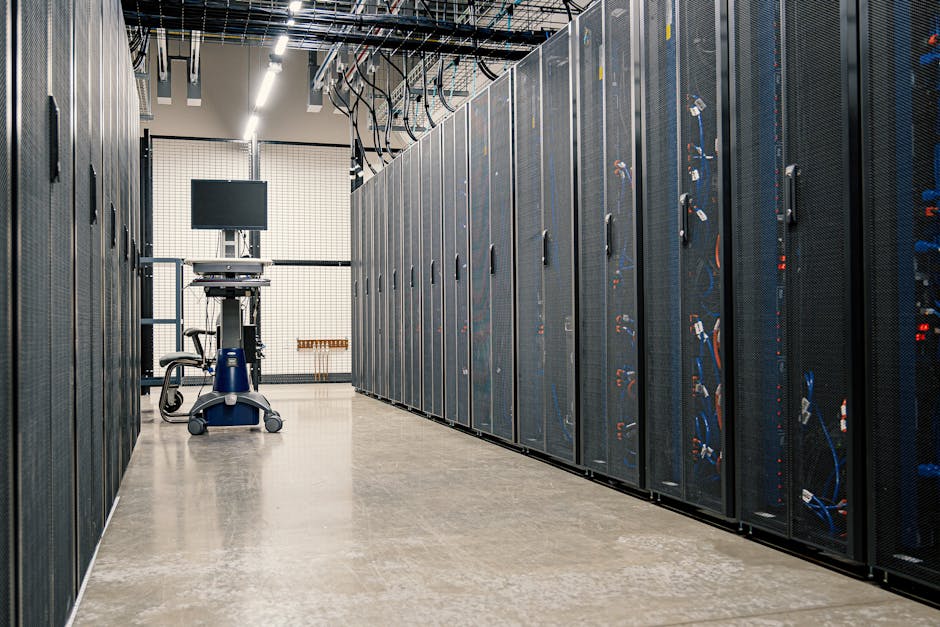
How Multi-Tenancy Works: Shared Infrastructure with Logical Isolation
Multi-tenant architecture works by adding a tenant identifier to every piece of data and every request. When a user logs in, the system identifies which tenant they belong to. Every database query, every API call, every file upload is scoped to that tenant ID. The application enforces this boundary in code.
Here’s what happens when a user from Company A logs into your SaaS product:
- They authenticate. The system checks their email against the users table and finds their tenant ID (say, tenant_123).
- The session stores that tenant ID. Every subsequent request includes it.
- When they request a list of projects, the query filters by tenant_123. They see only their company’s projects.
- When they create a new project, the system automatically assigns tenant_123 to that record.
- If they try to access a project from tenant_456 (Company B), the query returns nothing. The application doesn’t throw an error. It just filters them out.
This pattern repeats for every feature. Invoices, users, files, API keys. Everything is scoped by tenant. The database doesn’t care that it’s storing data for 500 companies. It’s just rows with a tenant_id column. The application code enforces the boundaries.
The alternative is single-tenant architecture, where each customer gets their own database, their own application instance, sometimes their own server. That model works for enterprise customers who demand it (and pay for it). For most SaaS products, it’s too expensive to operate and too slow to scale. If you’re building a SaaS product with AI or targeting small-to-midsize businesses, multi-tenancy is the default.

Why Multi-Tenant Architecture Matters: Cost and Scale
Multi-tenant architecture exists because it’s cheaper to run and faster to scale than single-tenant alternatives. The economics are simple. One database costs less than 100 databases. One deployment pipeline is faster than 100 deployment pipelines. One codebase is easier to maintain than 100 forks.
Here’s what that looks like in practice. A single-tenant SaaS product with 50 customers might require 50 separate database instances, 50 sets of environment variables, 50 deployments every time you push a bug fix. A multi-tenant product with 50 customers requires one database, one deployment, one set of infrastructure. The operational cost difference is not 50x, but it’s significant.
This model also makes scaling predictable. When you add customer 51, nothing changes. The same database handles the new tenant. The same application servers process their requests. You don’t provision new infrastructure until you hit actual resource limits, which typically happens in the hundreds or thousands of tenants, not the tens.
According to the 2025 SaaS Infrastructure Benchmark Report by Bessemer Venture Partners, multi-tenant SaaS companies achieve 60% lower infrastructure costs per customer than single-tenant equivalents at scale.
The cost savings matter most in the early stages. When you’re building your MVP or trying to reach your first 100 customers, you don’t have the revenue to justify dedicated infrastructure per customer. Multi-tenancy lets you serve 10 customers or 1,000 customers from the same architecture. That’s why nearly every SaaS MVP we build is multi-tenant from day one.

Single-Tenant vs Multi-Tenant: When to Use Each
Single-tenant architecture makes sense in three situations. First, when a customer requires it for compliance or security reasons. Healthcare, finance, and government customers often demand isolated infrastructure. Second, when a customer is large enough to justify the operational cost. If one customer represents 40% of your revenue, giving them a dedicated instance is a reasonable trade. Third, when you’re selling to enterprises who expect customisation at the infrastructure level, not just the application level.
For everyone else, multi-tenant is the right choice. It’s faster to build, cheaper to run, and easier to maintain. The tradeoff is complexity. You need to design for isolation from the start. You need to test that a bug in Tenant A’s account doesn’t affect Tenant B. You need to handle noisy neighbour problems, where one tenant’s heavy usage slows down everyone else.
Here’s a practical comparison:
- Multi-tenant: Shared database, shared application, logical isolation. Lower cost per customer, faster to deploy, harder to customise per tenant. Best for most SaaS products targeting SMBs or mid-market.
- Single-tenant: Dedicated database, dedicated application, physical isolation. Higher cost per customer, slower to deploy, easier to customise per tenant. Best for enterprise customers with compliance requirements or large contracts.
- Hybrid: Some tenants on shared infrastructure, some on dedicated. Common in mature SaaS companies. Adds operational complexity but lets you serve both markets.
Most founders don’t need to choose on day one. Start multi-tenant. If an enterprise customer demands single-tenant later, that’s a good problem. It means you have revenue to justify the complexity. Optimising for that scenario too early is one of the common SaaS startup mistakes we see repeatedly.

How to Implement Multi-Tenant Architecture: Database Design Patterns
There are three common ways to implement multi-tenancy at the database level. Each has tradeoffs. The right choice depends on your isolation requirements, scale expectations, and how much operational complexity you’re willing to manage.
Row-level tenancy (shared schema): All tenants share the same database and the same tables. Every table has a tenant_id column. Queries filter by tenant_id. This is the simplest model and the one we use for most projects. It scales well into the thousands of tenants, keeps infrastructure costs low, and makes migrations straightforward. The risk is a missing WHERE tenant_id = clause in a query, which could expose data across tenants. That’s preventable with good testing and query abstractions.
Schema-level tenancy: Each tenant gets their own database schema within a shared database instance. Tenant A’s data lives in schema_tenant_a, Tenant B’s in schema_tenant_b. This provides stronger isolation than row-level tenancy and makes it easier to restore a single tenant’s data without affecting others. The tradeoff is operational complexity. Migrations need to run across every schema. Monitoring needs to track per-schema metrics. This model works well when you have tens or low hundreds of tenants, not thousands.
Database-level tenancy: Each tenant gets their own dedicated database instance. This is the strongest isolation model and the most expensive to operate. It’s effectively single-tenant infrastructure with a multi-tenant application layer. Use this only when compliance requires it or when you’re serving very large enterprise customers who demand it contractually.
For most SaaS products, row-level tenancy is the right starting point. It’s what we use at Inqodo unless a project has specific requirements that justify the added complexity of schema- or database-level isolation. You can always migrate to a more isolated model later if a customer demands it. Starting there is premature optimisation.

Operational Concerns: Noisy Neighbours, Quotas, and Observability
The hardest part of multi-tenant architecture isn’t building it. It’s operating it. You need to prevent one tenant from degrading performance for everyone else, enforce usage limits fairly, and diagnose problems at the tenant level without exposing cross-tenant data.
The “noisy neighbour” problem is real. One tenant runs a bulk import that locks the database. Another tenant’s user writes an API script that hits your endpoints 10,000 times per minute. A third tenant uploads 50GB of files in an hour. If you don’t design for this, one tenant’s behaviour affects everyone else’s experience. The fix is rate limiting, resource quotas, and query timeouts. Every API endpoint should have per-tenant rate limits. Every background job should have execution time limits. Every file upload should check against a per-tenant storage quota.
Observability in a multi-tenant system means tagging everything by tenant. Logs, metrics, traces. When a customer reports a bug, you need to filter your monitoring dashboard to their tenant ID and see exactly what happened. When query performance degrades, you need to identify which tenant’s queries are slow. When an error rate spikes, you need to know if it’s affecting all tenants or just one. Without tenant-scoped observability, debugging multi-tenant systems is guesswork.
Tenant provisioning is another operational concern. When a new customer signs up, what happens? In a well-designed multi-tenant system, nothing. The application creates a new tenant record, assigns a tenant ID, and the user starts working. No manual setup, no infrastructure provisioning, no deployment. If onboarding a new tenant requires engineering work, your architecture isn’t truly multi-tenant yet.
These concerns don’t appear in the first week of building a SaaS product. They appear in month three when you have 20 customers and one of them is using 80% of your database connections. Planning for them early is cheaper than retrofitting them later. When we scope a SaaS project, we factor in rate limiting, tenant quotas, and observability from the start. It’s not optional infrastructure. It’s how you keep a multi-tenant product running reliably as it scales.
Is Multi-Tenant Architecture Secure?
Multi-tenant architecture is secure if you design it to be secure. The risk isn’t the pattern itself. The risk is a missing tenant filter in a query, a broken access control check, or a poorly scoped API key. These are implementation problems, not architectural ones.
The most common security mistake in multi-tenant systems is a query that forgets to filter by tenant_id. A developer writes SELECT * FROM projects WHERE user_id = 123 instead of SELECT * FROM projects WHERE user_id = 123 AND tenant_id = ‘tenant_abc’. That query returns projects across all tenants, not just the user’s tenant. If that data reaches the frontend, you have a data leak.
The fix is to enforce tenant scoping at the framework level, not the query level. Use an ORM or database abstraction layer that automatically adds tenant filters to every query. In our projects, we use row-level security policies in Supabase or middleware in Next.js that injects the tenant context into every request. That way, forgetting to add the tenant filter isn’t possible. The framework enforces it.
Another risk is cross-tenant data exposure through shared resources. If two tenants upload files to the same S3 bucket without proper key prefixing, one tenant could theoretically guess another tenant’s file URL. The fix is to scope every shared resource by tenant. Files go into /tenant_abc/filename.pdf, not /filename.pdf. API keys include the tenant ID. Sessions store the tenant ID and validate it on every request.
Multi-tenant SaaS products are used by millions of businesses globally. Slack, Notion, Salesforce, and most modern SaaS tools are multi-tenant. The architecture is proven. The security concerns are real but solvable. If you’re deciding between custom software development and no-code tools, one advantage of custom development is that you control the tenant isolation logic. No-code platforms handle it for you, which is fine until you need custom isolation rules or compliance certifications.
Choosing the Right Multi-Tenant Model for Your SaaS
If you’re building a SaaS product that serves multiple customers, you need multi-tenancy. The question is which implementation model fits your product, your customers, and your operational capacity.
Start with row-level tenancy unless you have a specific reason not to. It’s the simplest to build, the cheapest to run, and the easiest to maintain. If you’re building an MVP or trying to reach product-market fit, this is the right choice. You can always migrate to schema-level or database-level tenancy later if a customer demands it or compliance requires it.
Plan for tenant-scoped observability from day one. Tag your logs, metrics, and traces by tenant ID. When a customer reports a bug, you need to see what happened in their account without exposing data from other accounts. This isn’t a feature you add later. It’s infrastructure you build into the foundation.
Enforce tenant isolation at the framework level, not the application level. Use middleware, ORM policies, or database-level row security to ensure every query is scoped by tenant. Relying on developers to remember to add tenant filters is how data leaks happen.
The cost difference between multi-tenant and single-tenant architecture matters most in the early stages. If you’re trying to figure out how much SaaS development costs, multi-tenancy reduces your infrastructure spend significantly. That lets you focus budget on product features instead of operational overhead.
We’ve built multi-tenant SaaS products for 30+ founders. The architecture works. The tradeoffs are predictable. The mistakes are avoidable if you design for isolation from the start. If you’re not sure which model fits your product, use our SaaS cost calculator to estimate the cost of different approaches, or get in touch and we’ll scope it with you.
Frequently Asked Questions
What is multi-tenant SaaS architecture?
Multi-tenant SaaS architecture is a design pattern where a single application instance serves multiple customers (tenants) from shared infrastructure. Each tenant’s data is logically isolated using tenant identifiers, but the database, application servers, and codebase are shared. This model reduces infrastructure costs and makes scaling predictable compared to single-tenant architectures where each customer gets dedicated resources.
What is the difference between single-tenant and multi-tenant architecture?
Single-tenant architecture gives each customer a dedicated instance of the application, including separate databases and servers. Multi-tenant architecture serves all customers from a shared instance with logical data isolation. Single-tenant costs more to operate but offers stronger physical isolation. Multi-tenant costs less and scales faster but requires careful design to prevent cross-tenant data exposure. Most modern SaaS products use multi-tenant architecture.
How does multi-tenancy work in SaaS?
Multi-tenancy works by adding a tenant identifier to every piece of data and every request. When a user logs in, the system identifies their tenant and scopes all database queries, API calls, and file operations to that tenant ID. The application enforces this boundary in code, ensuring users can only access data belonging to their tenant. This happens automatically through middleware or ORM-level filters that inject tenant context into every operation.
What are the benefits of multi-tenant architecture?
Multi-tenant architecture reduces infrastructure costs by sharing resources across customers, makes scaling predictable because adding new customers doesn’t require new infrastructure, and simplifies operations by maintaining a single codebase and deployment pipeline. According to Bessemer Venture Partners, multi-tenant SaaS companies achieve 60% lower infrastructure costs per customer than single-tenant equivalents at scale. This model is especially valuable for early-stage SaaS products where minimising operational overhead is critical.
Is multi-tenant architecture secure?
Multi-tenant architecture is secure when implemented correctly. The main risk is a missing tenant filter in a query that could expose data across tenants. This is preventable by enforcing tenant scoping at the framework level using middleware, ORM policies, or database row-level security. Major SaaS platforms like Slack, Notion, and Salesforce use multi-tenant architecture and serve millions of users securely. The architecture itself is proven, the security concerns are real but solvable through proper isolation design.
How do you implement multi-tenant SaaS architecture explained for developers?
Implementation typically uses one of three database patterns: row-level tenancy where all tenants share tables and every row has a tenant_id column, schema-level tenancy where each tenant gets a separate database schema, or database-level tenancy where each tenant gets a dedicated database. Row-level is simplest and most common for startups. The key is enforcing tenant filters automatically through your ORM or middleware so developers can’t accidentally write queries that leak data across tenants.
When should you use single-tenant instead of multi-tenant architecture?
Use single-tenant architecture when a customer requires it for compliance or security reasons (common in healthcare, finance, and government), when one customer is large enough to justify dedicated infrastructure costs, or when you’re selling to enterprises who expect infrastructure-level customisation. For most SaaS products targeting small-to-midsize businesses, multi-tenant is the right choice. You can always offer single-tenant as an enterprise option later once you have the revenue to support the operational complexity.
Ready to Get Started?
Building a multi-tenant SaaS product means making architectural decisions that affect security, cost, and scalability from day one. Get them right and you have a foundation that scales with your business. Get them wrong and you’re refactoring in production six

Inqodo
Inqodo Team