 Inqodo
On this page
B2B SaaS development is what founders need to know before they write a single line of code. Most B2B SaaS founders think the hard part is building the product. It’s not. The hard part is building the right product for the right market at the right time — then figuring out how to sell it before the money runs out. The code is the easy bit. The decisions before and after the code are what kill most projects.
This guide covers what actually matters when you’re building B2B SaaS in 2026. Not theory. Not what worked in 2018. What works now — from someone who has shipped 30+ products and had the honest conversations most agencies avoid.

1. What Founders Need to Know: Validate the Problem Before You Write a Line of Code
Most B2B SaaS products fail because nobody wanted them. Not because the code was bad. Not because the UI was ugly. Because the founder built something nobody asked for and assumed they’d figure out the market later.
Validation means talking to 10–15 people in your target market and hearing the same problem described in their words. Not “would you use this if it existed” — that question is useless. Ask what they do now, how much it costs them, and what they’ve already tried. If they’re not paying for a solution today, they won’t pay for yours tomorrow.
We’ve turned down projects where the founder had a clear vision, a reasonable budget, and zero evidence that anyone wanted it. That’s not us being difficult. That’s us not wanting to take money for something that won’t work. Most agencies won’t say this — they’ll take the brief and build it anyway.
According to CB Insights, 42% of startups fail because there’s no market need for their product — making it the single biggest cause of failure.

2. Pick Your Tech Stack Based on What You’ll Need in 18 Months, Not 18 Days
The wrong tech stack doesn’t kill you at launch. It kills you at month 14 when you’re trying to scale, add enterprise features, or integrate with a client’s existing systems — and your no-code tool or legacy framework can’t do it.
For most B2B SaaS products in 2026, the stack that works is: Next.js for the front end, Node.js for the back end, PostgreSQL for the database, and hosting on Vercel or AWS. This is not the only stack. It is the stack that won’t box you in when you need to move fast later.
No-code tools like Bubble are fine for validation. They become a problem when you need custom logic, complex workflows, or white-label versions for enterprise clients. If your product is simple enough to stay in Bubble forever, you probably don’t have a defensible business. If it’s not, plan the migration before you’re forced into it. For a detailed breakdown of what it actually costs to build a SaaS product with the right stack, see our full cost guide for founders.
3. Track the Metrics That Actually Matter — and Ignore Vanity Numbers
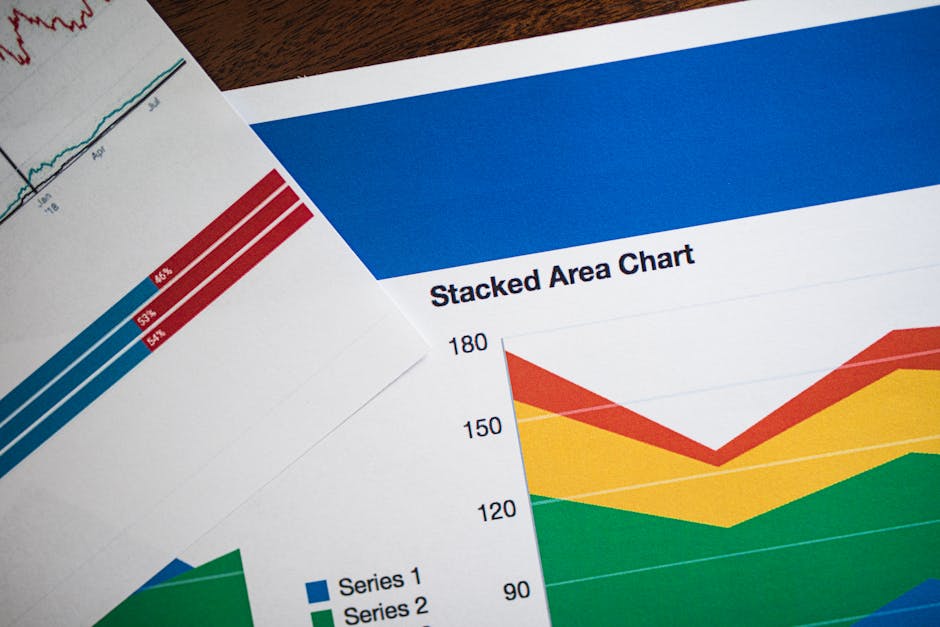
If you’re not tracking MRR, churn, CAC, and LTV, you’re flying blind. These are not nice-to-haves. They are the numbers that tell you whether your business works.
- MRR (Monthly Recurring Revenue): the lifeblood of SaaS — how much predictable revenue you have each month
- Churn rate: the percentage of customers who cancel — if this is above 5% monthly for B2B, something is broken
- CAC (Customer Acquisition Cost): how much you spend to win one customer
- LTV (Lifetime Value): how much a customer is worth over their entire relationship with you
The ratio that matters most: LTV should be at least 3x CAC. If it’s not, you’re spending more to acquire customers than they’re worth. That’s not a business — it’s a subsidy programme.
Sign-ups, page views, and social media followers are vanity metrics. They feel good. They don’t pay the bills. Focus on revenue, retention, and unit economics. Everything else is noise.

4. Build a Founding Team That Can Actually Execute
A solo founder can build an MVP. A solo founder cannot build a B2B SaaS business. You need at least two people — one who understands the market and can sell, one who can build the product. Ideally, you need three: someone technical, someone commercial, and someone who can manage operations without setting money on fire.
The worst founding team is three people with the same skill set. Three developers, three salespeople, three “ideas people” — none of these work. You need complementary skills, not friendship. Hire for what you’re missing, not what makes you comfortable.
If you’re non-technical and building alone, you have two options: learn enough code to be dangerous, or find a technical co-founder. Outsourcing development works for MVPs — we do this for founders all the time — but you can’t outsource your entire product roadmap forever. At some point, you need someone in-house who understands the codebase.
5. Your Go-to-Market Strategy Matters More Than Your Product Features
You can have the best product in your category and still lose to a worse product with better distribution. This is not fair. This is how markets work.
B2B SaaS has three main go-to-market motions: product-led growth (free trial, self-serve), sales-led (outbound, demos, enterprise deals), and partner-led (integrations, resellers, referral networks). Most founders pick one and assume it’ll work. The right motion depends on your ACV (average contract value) and your buyer.
If your ACV is under $500/month, you need self-serve. Nobody is getting on a sales call to buy a $29/month tool. If your ACV is over $2,000/month, you probably need sales — enterprise buyers want to talk to a human before they commit budget. If you’re somewhere in between, you need both, which is expensive and complicated.
We’ve seen founders spend six months building features nobody asked for because they didn’t have a clear GTM plan. Build the simplest version that proves the concept, then figure out how to sell it. Not the other way around. For more on scoping and launching the right MVP, read our ultimate guide to MVP development.

6. Security and Compliance Are Not Optional for B2B
If you’re building consumer SaaS, you can get away with basic security and fix it later. If you’re building B2B SaaS, you can’t. Enterprise buyers will ask about SOC 2, GDPR, data residency, and penetration testing before they sign. If your answer is “we’ll sort that out later,” you’ve lost the deal.
The minimum security checklist for B2B SaaS in 2026: encrypted data at rest and in transit, role-based access control, audit logs, and a clear data processing agreement. If you’re selling into healthcare, finance, or government, add HIPAA, PCI-DSS, or Cyber Essentials depending on your region.
This is not something you bolt on at the end. Security architecture decisions made in week one affect what you can promise in month twelve. We build this in from the start because retrofitting it later costs 10x more and delays enterprise deals by months.
7. AI Integration Is Now Table Stakes — But Only If It Solves a Real Problem
Every B2B SaaS pitch deck in 2026 mentions AI. Most of them shouldn’t. AI is not a feature — it’s a tool. The question is whether it solves a problem your users actually have.
Good AI integration: automating repetitive tasks, surfacing insights from data, generating first drafts that humans refine. Bad AI integration: adding a chatbot because everyone else has one, slapping “AI-powered” on your homepage, or building a product that’s just a thin wrapper around ChatGPT.
We use Claude for most AI features because its outputs are predictable and its reasoning is transparent. That matters when you’re building something a business depends on. If you’re integrating AI, know what happens when the model is wrong — because it will be wrong, and your users will notice. For more on how AI is reshaping SaaS, see our post on whether SaaS is being replaced by AI.
8. Pricing Is a Product Decision, Not a Marketing One
Most founders underprice their B2B SaaS because they’re scared nobody will pay. This is a mistake. B2B buyers are not price-sensitive in the way consumers are. They care about ROI. If your product saves them £10,000 a year, they’ll pay £2,000 for it without blinking.
The three pricing models that work for B2B SaaS: per-seat (Slack, Notion), usage-based (AWS, Twilio), and flat-rate tiers (most vertical SaaS). Pick the one that aligns with how your customers get value. If value scales with team size, charge per seat. If it scales with usage, charge per API call or transaction. If value is consistent regardless of size, use flat tiers.
Test pricing before you build. Put a landing page up with three pricing tiers and see which one people click. If nobody clicks the highest tier, you’ve priced too high. If everyone clicks it, you’ve priced too low. Adjust before you write the billing logic.
9. Build an MVP That Proves One Thing — Not Everything
An MVP is not a cheaper version of your final product. It is the smallest thing that answers the question: will people pay for this? If your MVP has 14 features, it is not an MVP. It is a full product you’re calling an MVP to feel better about the timeline.
The best MVPs we’ve built do one thing well. A bid generator that writes government submissions. A workflow tool that automates onboarding. A data sync that connects two systems nobody else connects. One problem, one solution, no distractions.
Most MVPs ship in 4–6 weeks if the scope is clear. If someone tells you it’ll take six months, they’re either building too much or they don’t know what they’re doing. We scope every project before we price it because taking money for something unscoped is how projects go wrong. For a full breakdown of realistic timelines, read our guide on how long it takes to build a SaaS product.
10. Know When to Bootstrap and When to Raise
Bootstrapping works if your product is simple, your market is clear, and you can get to revenue quickly. Raising works if you need to move fast, hire a team, or compete in a space where speed is the only moat.
Most B2B SaaS founders raise too early. They raise a pre-seed round before they’ve validated the market, then spend 18 months building something nobody wants. The best time to raise is after you have 10–20 paying customers and clear evidence of product-market fit. Investors don’t fund ideas anymore. They fund traction.
If you’re bootstrapping, keep your burn low. Use Inqodo to build the MVP instead of hiring a full-time developer you can’t afford yet. Use no-code tools for internal workflows. Outsource everything that isn’t core to the product. The goal is to get to $10k MRR before you run out of money. After that, the options open up.
11. Your Roadmap Should Be Driven by Customers, Not Your Opinion
The features you think are important are not the features your customers think are important. This is always true. The only way to know what to build next is to ask the people paying you.
Set up a feedback loop from day one. A Slack channel, a shared Notion board, a monthly call with your top 10 customers. Ask them what’s broken, what’s missing, and what they’d pay more for. Build the thing that shows up in every conversation. Ignore the thing that one person mentioned once.
We’ve seen founders spend three months building a feature nobody asked for because they thought it was cool. It shipped. Nobody used it. That’s three months and £15,000 you don’t get back. Build what customers will pay for, not what you think they should want.
Frequently Asked Questions
How long does it take to build a successful B2B SaaS?
An MVP typically ships in 4–6 weeks if scoped properly. Getting to product-market fit and meaningful revenue usually takes 12–18 months. The timeline depends on how quickly you can validate the market, iterate based on feedback, and build a repeatable sales process. Most founders underestimate the go-to-market timeline, not the build timeline.
What are the biggest mistakes B2B SaaS founders make?
Building without validating the market first. Underpricing because they’re scared nobody will pay. Raising money too early before they have traction. Picking the wrong tech stack and getting boxed in later. Ignoring security and compliance until an enterprise buyer asks. Most of these are fixable if you catch them early — expensive if you don’t.
How do you validate product-market fit in B2B SaaS?
You have product-market fit when customers are pulling the product from you, not when you’re pushing it to them. Concrete signals: 10+ paying customers who renewed, organic inbound inquiries, word-of-mouth referrals, and a churn rate below 5% monthly. If you’re still convincing people to try it, you don’t have fit yet.
What funding stages are best for B2B SaaS startups?
Bootstrap until you have 10–20 paying customers and clear evidence of demand. Raise a pre-seed or seed round once you’ve proven the market and need capital to scale sales and product. Series A comes when you have repeatable revenue growth and want to dominate a category. Raising before you have traction wastes time and dilutes equity unnecessarily.
How to price a B2B SaaS product?
Price based on the value you deliver, not your costs. If you save a customer £10,000 a year, charge £2,000–£3,000. Use per-seat pricing if value scales with team size, usage-based if it scales with activity, or flat tiers if value is consistent. Test pricing with a landing page before you build billing logic. Most founders underprice out of fear — B2B buyers care about ROI, not sticker price.
What is the most important thing about B2B SaaS development that founders need to know?
The product is not the hard part. Validating the market, pricing it correctly, building a repeatable sales process, and managing cash flow are the hard parts. Most B2B SaaS products fail because the founder built the wrong thing for the wrong market — not because the code was bad. Get the strategy right before you write a line of code.
Should I use no-code tools or custom development for my B2B SaaS?
No-code tools like Bubble work for validation and simple use cases. They become a problem when you need enterprise features, complex workflows, or custom integrations. If your product will stay simple forever, no-code is fine. If you’re planning to scale or sell to enterprise buyers, plan for custom development from the start. The migration later is expensive and risky.
Ready to Get Started?
If you’re building B2B SaaS and want a team that will tell you the truth before taking your money, we should talk. We’ve built 30+ products, scoped hundreds of projects, and turned down the ones that wouldn’t work. We don’t do discovery phases that cost £10,000 and produce a PDF. We scope during the conversation and price it straight.
MVPs start from $2,000 for a working product that proves the concept. Full B2B SaaS builds with auth, billing, and integrations typically run $8,000–$15,000 depending on scope. We’ll tell you what it costs after one call, not three meetings later. If you want an honest conversation about what you’re building and what it’ll take to ship it, get in touch with Inqodo.
Inqodo
Inqodo Team